A frozen drinks machine freezes drinks fast by chilling the liquid against a refrigerated barrel wall while a rotating auger constantly scrapes and mixes it. This produces thousands of tiny ice crystals instead of large blocks. The result is a smooth, spoonable slush ready to serve within roughly an hour of loading.
Speed depends on three things: the cooling power of the machine, the sugar level of the mix, and how well the unit is maintained. The sections below explain how the process works and what keeps a commercial frozen drinks machine performing at busy times.
What happens inside the freezing barrel?
Inside the freezing barrel, a refrigeration system cools the barrel walls to well below freezing while a rotating auger scrapes ice crystals off the surface and stirs them back into the liquid. This constant motion keeps the drink as a fine, uniform slush instead of letting it set into a solid block.
The process works in a loop:
- Cooling: The refrigeration unit chills the outer wall of the barrel, so the liquid touching it begins to form ice crystals first.
- Scraping: The auger or paddle sweeps those crystals off the wall before they can grow larger.
- Mixing: The crystals blend through the rest of the liquid, lowering its overall temperature evenly.
- Maintaining: Sensors monitor the thickness of the mix and switch the cooling on and off to hold the slush at the target consistency.
Because the machine freezes a thin layer at a time and keeps stirring, the whole batch cools much faster than it would sitting in a freezer. The same principle applies whether the machine serves classic slush, carbonated frozen drinks, or frozen coffee.
Why does sugar content affect how fast drinks freeze?
Sugar lowers the freezing point of water, so a drink with more dissolved sugar needs a lower temperature to form ice crystals. Too little sugar and the mix freezes into hard ice, while too much leaves it syrupy and slow to freeze. The right balance gives a smooth slush quickly.
Sugar molecules interfere with water molecules bonding into ice. This is why commercial syrups are formulated for specific mixing ratios, often measured in Brix, which is a measure of sugar concentration. A correctly mixed drink freezes at a steady rate and holds its texture, while an incorrect ratio causes two common problems:
- Too diluted: The mix freezes solid, can strain the auger motor, and produces icy, crunchy slush.
- Too concentrated: The mix struggles to freeze, stays runny, and may never reach serving consistency.
Sugar-free and naturally sweetened recipes are developed with this in mind, using alternative ingredients to achieve the right freezing behaviour. Always measure syrup and water precisely rather than estimating by eye.
How long does a slush machine take to freeze?
Most commercial slush machines take between 45 minutes and 90 minutes to freeze a fresh batch to serving consistency, depending on the model, barrel size, starting temperature, and room conditions. Larger multi-barrel units may take longer than single-bowl machines.
Several factors influence the exact time:
- Starting temperature: Pre-chilled water and syrup shorten freeze time considerably.
- Ambient heat: A hot venue or poor ventilation around the machine makes the refrigeration work harder.
- Batch size: A full barrel takes longer than a part-filled one.
- Mix accuracy: Incorrect sugar levels can add significant time.
For venues, the practical tip is to load machines well before opening, so the first customers are served a properly frozen drink rather than a half-set one.
What’s the difference between slush and carbonated frozen drinks?
The key difference is that slush is a frozen, non-fizzy ice drink, while a carbonated frozen drink is chilled with dissolved carbon dioxide to create a fizzy texture and a finer, snowier consistency. Carbonated versions are served from specialised frozen carbonated beverage (FCB) machines.
Standard slush
Standard slush is produced in a barrel machine at atmospheric pressure. It has a soft, icy texture and is popular in family settings because it is simple, colourful, and refreshing.
Carbonated frozen drinks
Carbonated frozen drinks use a pressurised system, so the barrel is sealed and carbon dioxide is added to the mix. The pressure and fizz create a lighter, more refined texture and a distinctive tingle on the tongue. These machines are built to handle pressure safely, which is why they differ from standard slush units and need the correct syrup and a CO2 supply.
How much can a machine serve at busy times?
Output depends on barrel capacity and refrigeration power, but a typical commercial machine can serve dozens of cups from a single barrel before needing time to recover. Multi-barrel machines let venues offer several flavours at once and keep service moving during peak periods.
Recovery speed is what matters in a rush. After heavy dispensing, the machine must re-freeze fresh liquid as it enters the barrel. A well-specified unit refreezes quickly, so queues of customers do not drain the barrel faster than the machine can rebuild slush.
To handle peaks smoothly:
- Choose a machine sized for your peak footfall, not your average day.
- Keep the hopper topped up so fresh mix is always available.
- Avoid overfilling, which slows freezing.
- Consider multi-barrel units for variety without losing capacity.
For venues with high demand, such as cinemas, holiday parks, or indoor play centres, capacity planning is worth doing before choosing a unit.
What causes a slush machine to stop freezing properly?
A slush machine most often stops freezing properly because of an incorrect sugar ratio, poor ventilation, a dirty condenser, low refrigerant, or a worn auger. Checking the mix and airflow first resolves many cases before an engineer is needed.
Common causes and quick checks:
- Wrong syrup ratio: Test the mix and remake the batch if it is too weak or too sweet.
- Blocked airflow: Leave clear space around the machine so heat can escape.
- Dirty condenser: Dust and grease reduce cooling efficiency, so clean it regularly.
- Worn parts: A failing auger, seal, or motor can cause uneven freezing or leaks.
- Refrigeration faults: Weak cooling or unusual noises usually need a qualified engineer.
Regular cleaning, correct mixing, and scheduled servicing prevent most issues. Remote monitoring can also flag problems early, before they affect customers.
How Polar Krush Group helps with frozen drinks machines
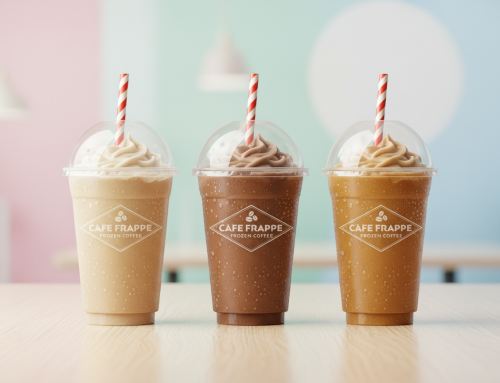
Choosing and running a frozen drinks machine is easier with a supplier that handles the equipment, the syrup, and the support. Polar Krush Group supplies venues across the UK with machines and drinks designed for fast, reliable freezing, including its Café Frappé frozen coffee range in Caramel, Latte, and Mocha.
Here is what operators can expect:
- Free-on-loan machine options to reduce upfront cost
- Syrups made at its UK plant, with sugar-free and naturally sweetened choices
- Remote Kare technology and a national team of trained engineers
- Training, ongoing stock supply, and marketing support
- Slush, carbonated frozen drinks, and frozen coffee for a broader menu
If you want a frozen drinks machine that keeps up with your busiest days, get in touch with Polar Krush Group today to discuss the right setup for your venue.